
Finding Norwood Resident Records
Start with the record that matches what is already known. An address is useful in the Norwood assessment database, while a full name and date of birth fit the state voter-status tool. A deed search can connect a property owner to a transfer, and a library volume can place a past household at a street number. Each source answers a smaller question. Together, they make a more dependable Norwood residents directory trail.
Property cards identify the tax owner, not every person at the property. Voter results confirm a registration record within the public and confidential-record rules. Deeds identify parties to a land document. Historical directories are dated snapshots. Keep the source and date beside each result, especially when the name is common or an address has changed.
- Use the Norwood property search with an address or owner name to anchor the parcel.
- For one person, use the Massachusetts voter registration search only when the full name, date of birth, and residential ZIP are known.
- Search the Norfolk Registry research portal for deeds, then follow grantor and grantee names.
- Check Morrill Memorial Library's digitized reports, newspapers, yearbooks, and directory leads for an earlier Norwood household.
- Ask the custodian for an existing record when the online route ends, using a focused request with names, date range, and address.
Norwood Residents Records Offices
Norwood has no single resident register. The Town Clerk holds local civil and election material, the assessor maintains the property roll, Norfolk County keeps land records, and state systems handle voter status and many court and vital-record channels. Their different scopes matter. A property card can lead to a deed, but it does not establish everyone who lives there. For a fuller address trail, use the Norwood street directory records sequence.
Norwood Town Clerk
566 Washington Street, P.O. Box 40
Norwood, MA 02062
781-762-1240
Note: Call before visiting any counter because Registry notices and municipal hours can change.
Norwood Property Cards by Name
The Norwood FY2026 Online Assessment Database is the local starting point for a named owner or street address. Its card preserves the difference between the site address and the owner mailing address. That distinction is essential: a mailing address may be a post-office box or outside Norwood, while the situs is the physical parcel. The fiscal-year card also supplies assessment information, map or lot facts where supplied, property characteristics, and Registry references when present.
| Norwood card field | How it helps |
|---|---|
| OWNER1 | Identifies the tax-roll owner. |
| Site or situs address | Locates the physical parcel. |
| Owner mailing fields | Shows where tax mail is sent, which may differ from the site. |
| Map, lot, book, or page | Supplies links for parcel and deed research where displayed. |
| Assessment and property facts | Places the card in its fiscal-year context. |
The FY2026 bill reflects ownership as of January 1, 2025, and its assessment uses 2024 sales. Treat it as a dated property record, not a live household roster.
See the Norwood search screen before using the image below. It shows the address and owner route that begins a property-based Norwood residents directory search.
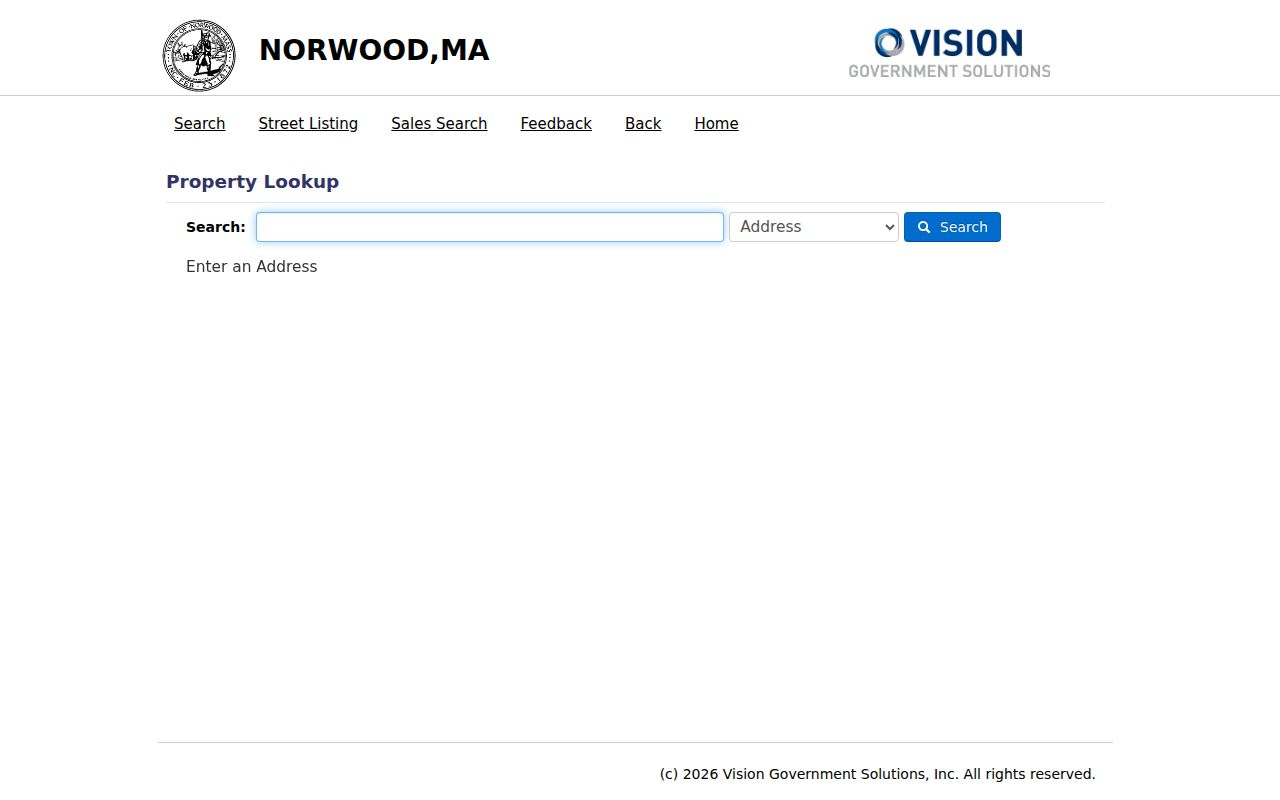
Use the result as an owner-and-parcel lead, then confirm transfers through the Registry.
Norwood Deed Names Since 1793
Norfolk Registry land books and images reach back to 1793. Recorded land and registered Land Court land are separate systems, though the combined address route searches both. Name, grantor or grantee category, town, document type, date, address, book and page, and plan routes give a researcher several ways to find a record. Search surname first, omit titles, and use a wildcard for a spelling variant when the portal permits it. Municipal records can appear as “Norwood Town of.”
Address indexing is strongest from 2003 forward. Earlier Norwood work needs the current owner, the seller as grantor, a legal description, and book or page references rather than an address string alone. The Registry's free research and view-only prints carry an unofficial-copy overlay. Its guide describes clean copies as a login, subscription, or payment path. The Registry public-request form is another channel when a record is not reachable through the portal.
- Roll
- A dated list or database maintained for a particular public purpose.
- Index
- A finding tool that points to a record, not always the underlying document.
- Parcel
- A defined piece of land represented on an assessment card or map.
- Grantor and grantee
- The party transferring land and the party receiving it in a recorded instrument.
Note: A deed party has a connection to a property transaction, not automatic proof of present residence.
Current Norwood Residents Directories
Current sources have different audiences and limits. The assessment card is an ownership record. The voter service returns one registration result after its required details are entered. A Registry index names parties to land documents. Town reports and local resources can add a dated civic or historical lead. No source found is a complete, unrestricted list of every Norwood resident.
| Norwood source | What it can establish | Custodian | Access route |
|---|---|---|---|
| FY2026 assessment card | Tax owner, parcel, situs and mailing context | Norwood Assessor | Free online search |
| Voter registration result | Registration information within public-field limits | Massachusetts elections system | Individual lookup with required details |
| Land-record index | Grantors, grantees, document and recording data | Norfolk Registry | Online research, counter, or request |
| Annual reports | Dated officials, boards, department context, and statistics | Town and Morrill Library | Digital archive and library help |
| Local-history material | Directories, newspapers, yearbooks, cemetery and house clues | Morrill and Historical Society | Archive, collection, or assisted research |
A name that appears in one index still needs context. Match dates, addresses, family links, document roles, and the source's own scope before treating it as the same person.
Norwood Voter Lookup Limits
The Massachusetts voter registration search asks for first name, last name, full date of birth, a five-digit residential ZIP, and an acknowledgement. It is a status tool for an identified person, not a way to browse a street or produce a townwide file. A nonmatch advises trying a prior ZIP, but a nonmatch does not disprove a Norwood connection.
State guidance says public local-list material can include name, address, party or enrollment, date of birth, status, voter ID, participation, previous changes, mailing address, registration date, and inactivity date. Phone, email, veteran status, permanent-absentee status, confidential records, and minors are not public. The Town Clerk can explain a request for a dated municipal list and its production cost. Confidential voter rules in M.G.L. c. 51, § 47C and 950 CMR 49 still apply.
The state voter-information guidance explains that boundary between public list fields and protected data.
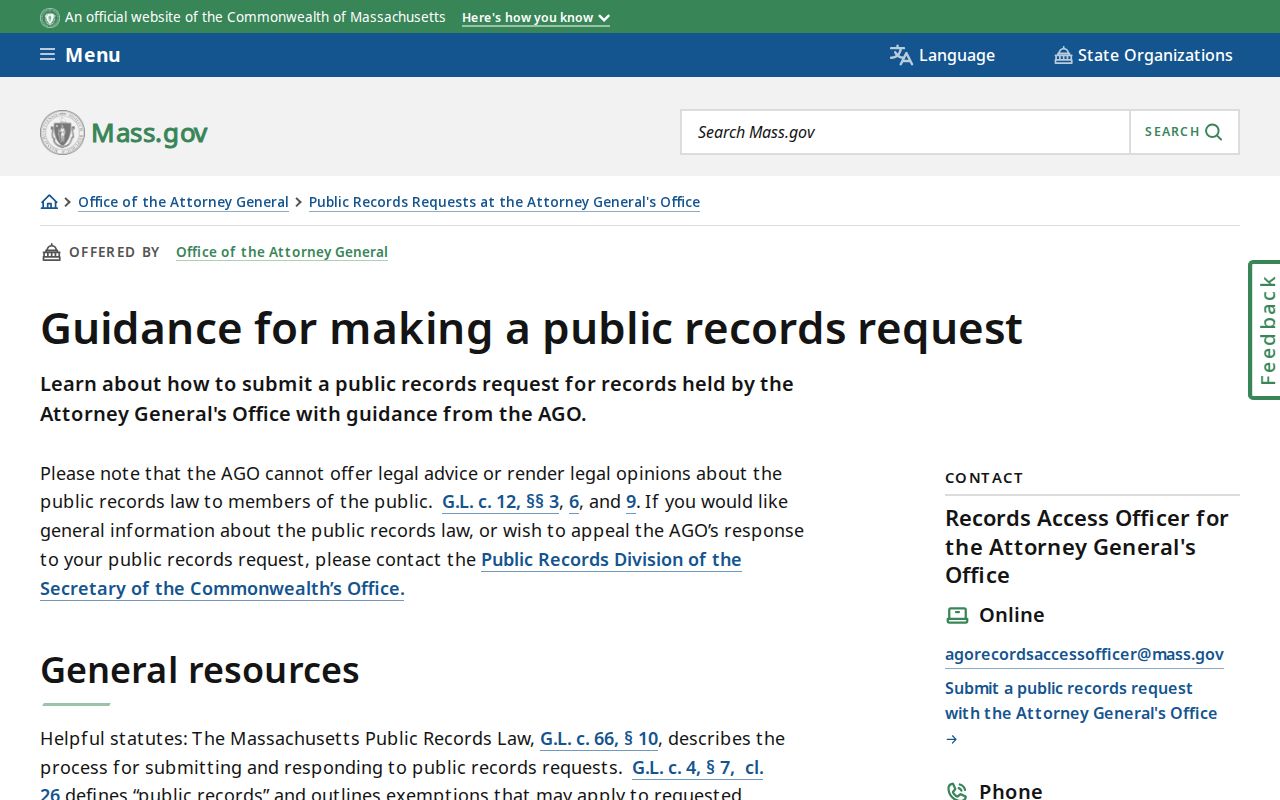
A focused written request helps when an existing local record is not posted online.
Norwood Vital Records Routes
Vital research depends on the event and period. Norwood Town Clerk is the local registrar for Norwood-held births, deaths, marriages, and marriage intentions. The state Registry of Vital Records and Statistics holds 1936-present records, while the State Archives holds historic vital material from 1841 through 1935. For older work, town, church, library, and archival sources become important. RVRS provides certified copies or a negative statement, not a public browseable index.
The local marriage form directs a requester to the municipality where the intention was filed. It asks for both parties' pre-marriage names, the date, contact number, copy count, and payment; its printed fee is $10 per certified copy. The form instructs requesters to include a stamped self-addressed envelope and use cash, bank check, or money order, not a personal check. Eligibility can vary by event and relationship, so verify current practice with the Clerk or RVRS ordering instructions.
Open the RVRS service page before ordering. It separates state certified-copy channels from the historic archive trail.
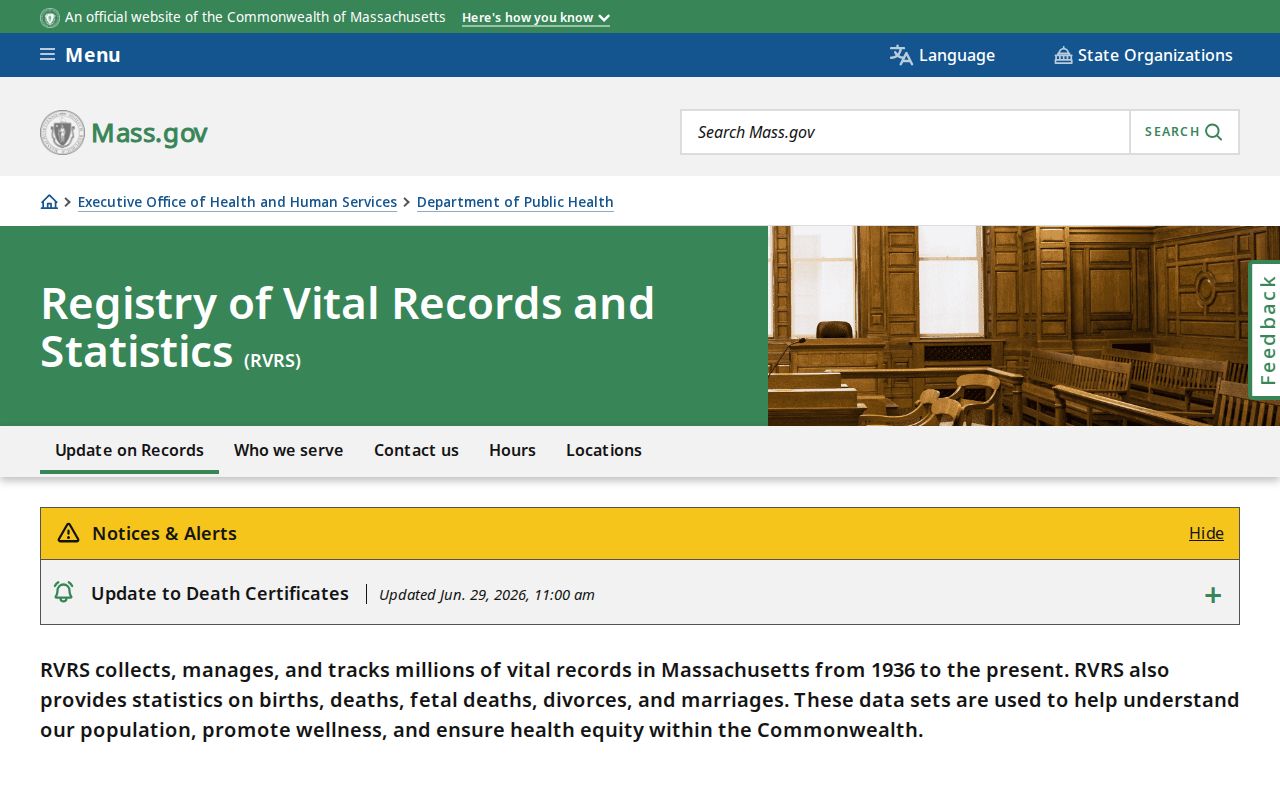
Use the custody split to choose the right office rather than assuming a modern portal holds every period.
Norwood Court Record Routes
MassCourts is the public starting point for a court-name search. The service requires a CAPTCHA, then routes a search through court department, division, location, name, case type, case number, or ticket number. Dedham District Court serves Norwood for its District Court matters. Norfolk Superior Court and Norfolk Probate and Family Court handle their own case types. The result can show parties, case number, court, filing date, docket events, hearings, and a disposition where public, but it is not proof that two people with the same name are the same person.
Public documents vary by case type and privacy rule. A clerk, register, courthouse kiosk, or permitted electronic channel may be needed for a complete file. Probate guidance puts online case data generally from about 2000 and documents or images generally from about 2009, while historic Norfolk probate indexes cover 1793-1929. Juvenile, sealed, expunged, impounded, adoption, confidential-victim, and protected-address material is not ordinary public search content. Confirm identity with address, date, family, or property context before using a docket as a Norwood residents directory lead.
Norwood Library Evidence Trails
Morrill Memorial Library's digital archive makes Norwood's local record history unusually useful. It lists the Advertiser and Review from 1887 to 1894, Norwood Advertiser from 1894 to 1905, Norwood Free Press from 1937 to 1950, Norfolk County Free Press from 1950 to 1962, and Norfolk County Press from 1962 to 1965. Digitized annual reports start in 1873. Yearbooks, municipal-record links, cemetery resources, and genealogy databases add more places to verify a name or address.
The Morrill digital archive is an online access channel. Library staff and the Norwood Historical Society offer human-assisted routes for local history, but neither collection claims every family or home. A newspaper notice may make an estate, marriage, or address request more precise. It does not replace the custodian record.
Note: The listed newspaper sequence has a 1905 to 1937 gap, so ask about physical or microfilm holdings before assuming the story ends.
Historic Norwood Residents Directories
Norwood's historical directory shelf is spread across several keepers. Massachusetts State Library holdings include directory years from 1876-1877 through selected 1942 volumes. Walpole Public Library provides digitized Norwood resident and business runs for 1893, 1897, 1900, 1906, 1909, 1911, 1916, and 1918. The National Archives guide identifies 1916, 1918, 1924, 1928, 1931, and 1933 as useful pairings with the 1930 Census.
A directory is a dated address snapshot, not proof of title or every household member. Record its title, year, page, spelling, street number, and whether it comes from a scan or an assisted source. The fuller collection, reading method, and census pairing are set out in the Norwood Directory Book.
Norwood Address Names Change
Older Norwood research has two local traps. Before incorporation in 1872, the place may appear as South Dedham. Washington Street also had a 1897 overpass and route change in local history. A historical address may therefore fail as a literal modern string even when the land record survives. Search the predecessor place name, surname, business name, legal owner, and deed description alongside the street.
Registry land coverage is deep, yet its old address indexing is limited. That contrast is why an old directory, Sanborn map, newspaper notice, or annual report can provide the bridge from an address to a name that works in the Registry index. The 1903 Sanborn's picture of Guild Square growth adds useful context, but it remains a map-era view rather than proof that a particular person lived there.
Norwood Portal Fallbacks
When a search page fails, use the access channel tied to the record. For land material, the Registry has online research, a public-request form, counter access, and historical research guidance. For municipal material, contact the Town Clerk or the department holding the record. For historic household questions, use the library, Historical Society, State Library, or Archives. Court records may require a clerk, courthouse kiosk, or register even when a docket index is public.
Massachusetts Public Records Law, M.G.L. c. 66, § 10, lets any person request an existing record, subject to exemptions in M.G.L. c. 4, § 7(26). Written requests are recommended. A records access officer generally responds within 10 business days with production, an estimate, a denial, a request for clarification, or an extension notice. State guidance also describes electronic delivery where available and appeal rights through the Supervisor of Records.
Open the Massachusetts request guidance for the current process, then name the record, Norwood connection, date range, and preferred format.
Business filings can confirm an affiliation or filing address on a date, but they are not evidence of a person's home address.
Norwood Record Boundaries Matter
Public access has limits. An assessment card does not reveal every occupant. Driver and motor-vehicle records are restricted. Court files can be sealed, expunged, impounded, or redacted. Juvenile, adoption, confidential-voter, and protected-address material is not a normal name-search result. Massachusetts Address Confidentiality Program participants may use a substitute address, and protected court proceedings can withhold a plaintiff's residential address and phone.
Use records lawfully. Norwood records can support family history, estate work, civic research, and scam verification. They must never be used to stalk, harass, intimidate, or harm anyone.
Official sources are more useful than a commercial people-finder category because they identify the custodian, the date, the source limits, and the available correction or request channel. Some official research is free online, while certified or clean copies, counter research, and archived material can require a fee or a visit.